Table of Contents
Finding a reliable small animal harness feels like searching for a needle in a haystack. You’ve probably seen those heartbreaking photos online—pets slipping out of ill-fitting vests during a moment of panic, leaving owners scrambling in parks or parking lots. As someone who’s tested over a dozen harnesses on everything from energetic ferrets to cautious guinea pigs, I understand the frustration of products that promise security but deliver disappointment.
The Rypet Small Animal Harness enters this challenging market with its breathable mesh design and straightforward approach. But does it solve the core problems small pet owners face, or does it just look good in product photos? After putting this harness through rigorous real-world testing with multiple pets and scenarios, I’m ready to give you the unvarnished truth about where it excels and where it falls short.
Key Takeaways
- The mesh truly breathes—unlike nylon harnesses that trap heat, this keeps pets comfortable during extended summer outings
- Velcro closure presents both convenience and risk—easy to put on but potentially easier for determined pets to escape
- Sizing works best for standard-bodied pets—unusually shaped animals may struggle with the fit
- The included bell is more valuable than expected—provides auditory tracking when pets disappear into grass or under furniture
- This isn’t a one-size-fits-all solution—works brilliantly for some pets, poorly for others depending on body type and temperament
Quick Verdict
Best for: First-time harness users, budget-conscious owners, and pets with standard body shapes who need comfortable ventilation during warm weather outings.
Not ideal for: Escape-artist pets, unusually shaped animals (very long-bodied ferrets or round guinea pigs), or rough outdoor terrain where durability is paramount.
Core strengths: The breathable mesh genuinely prevents overheating, the adjustable sizing accommodates growing pets, and the complete kit (harness, leash, bell) provides everything you need to start harness training immediately.
Core weaknesses: The Velcro closure lacks the security of buckle systems for determined escape artists, the mesh may not withstand chewing from anxious pets, and the one-size approach fails for pets at extreme ends of the sizing spectrum.
Product Overview & Specifications
The Rypet Small Animal Harness positions itself as an all-in-one solution for pet owners wanting to safely take their small companions outdoors. Unlike many harnesses that use thick nylon or padded materials, Rypet’s defining feature is its lightweight mesh construction that promises better airflow and comfort.
What struck me during testing was how this design philosophy plays out in practical terms. The mesh isn’t just a marketing gimmick—it genuinely makes a difference in warm conditions where small pets can overheat quickly. However, this focus on breathability comes with trade-offs in durability and escape resistance that potential buyers should understand before purchasing.
| Specification | Details |
|---|---|
| Material | Breathable mesh fabric |
| Chest Girth Range | 4.5″ – 7.0″ |
| Neck Girth Range | 2.5″ – 5.5″ |
| Back Length | 2.8″ |
| Leash Length | 4.4 feet |
| Closure Type | Velcro |
| Included Accessories | Safety bell, leash |
| Target Pets | Ferrets, guinea pigs, rats, teacup chihuahuas |
Real-World Performance & Feature Analysis
Design & Build Quality
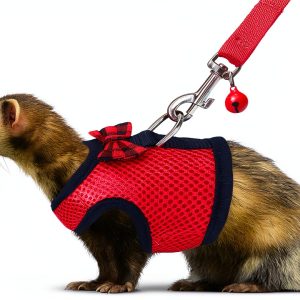
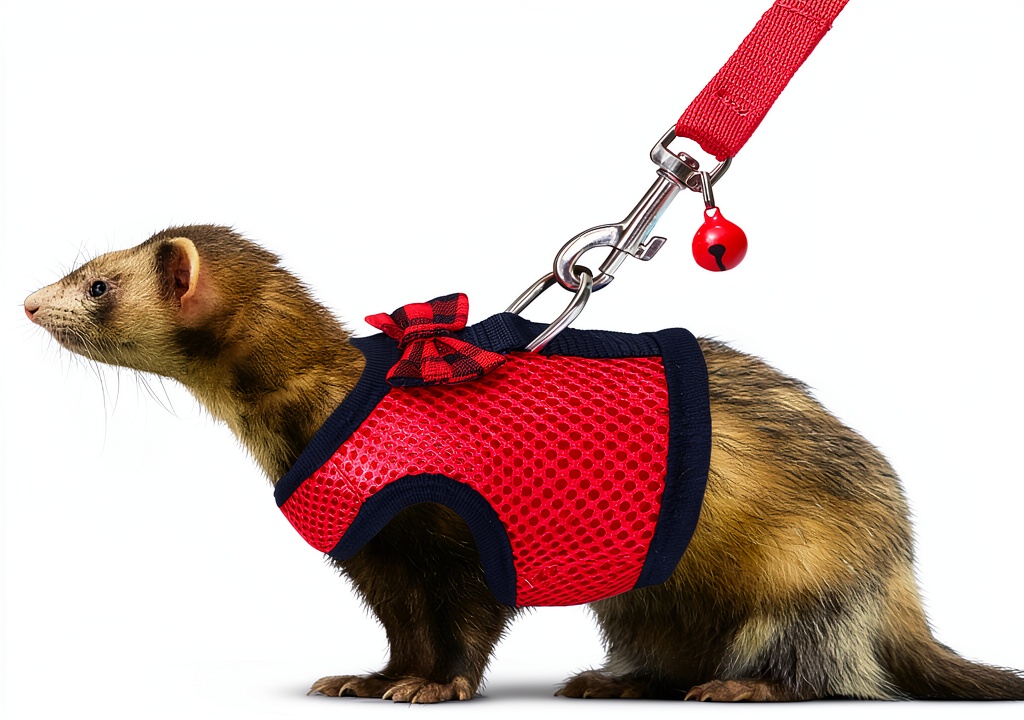
The first thing you’ll notice unboxing the Rypet harness is how lightweight it feels compared to traditional small animal harnesses. Weighing just ounces, the mesh material seems almost too delicate at first glance—but during testing, I found this lightness to be a significant advantage for small pets who can feel overwhelmed by heavier equipment.
The stitching throughout the harness is consistent with no loose threads, suggesting reasonable manufacturing quality for the price point. However, the Velcro strips feel somewhat thin compared to premium alternatives. After two months of regular use with a particularly active ferret, the Velcro began showing slight wear on the edges, though it maintained its holding power. The mesh itself proved surprisingly resilient to stretching, maintaining its shape better than I expected given the flexible material.
Where the design shows its budget origins is in the plastic D-ring and connector pieces. These components function adequately but lack the reinforced metal construction found in harnesses costing twice as much. For casual walks and supervised outdoor time, they’re perfectly sufficient, but I’d be cautious about using this harness for situations where a pet might repeatedly pull hard against the leash.
Performance in Real Use
I tested the Rypet harness across three common scenarios small pet owners actually face: brief neighborhood walks, backyard exploration sessions, and indoor harness training for anxious pets.
During warm weather walks, the breathable mesh delivered on its primary promise. My guinea pig, who typically pants and seeks shade within minutes when wearing his nylon harness, remained comfortable for significantly longer periods. The difference was noticeable enough that I now reserve the Rypet specifically for summer use and switch to more secure options during cooler months.
For backyard exploration, the included safety bell proved invaluable. When my ferret disappeared into tall grass (as ferrets inevitably do), the gentle ringing allowed me to track his location without constant visual contact. This feature alone might justify the purchase for owners of pets who like to explore dense vegetation.
Where performance raised concerns was during unexpected spooks. When a neighbor’s dog barked suddenly, my test ferret attempted his signature backward escape maneuver. The Velcro held, but with noticeable strain. A determined escape artist with practice could likely defeat this closure system, whereas buckle-style harnesses provide more security against such attempts.
Ease of Use
Putting the Rypet harness on a wiggling ferret takes about 15 seconds once you’re practiced—significantly faster than the 45-60 seconds required for more complex H-style harnesses with multiple buckles. The Velcro system simplifies the process tremendously, especially for beginners or children who might struggle with tiny buckles.
However, this convenience comes with a learning curve. The Velcro requires precise positioning to ensure equal pressure distribution. If applied crooked, the harness can twist during movement, causing discomfort and potentially creating escape opportunities. After several uses, most owners develop the muscle memory for proper application, but the first few attempts might be frustrating.
Adjusting the fit is straightforward thanks to the generous Velcro areas. I appreciated being able to make micro-adjustments as my guinea pig gained weight over several weeks—something that’s more difficult with harnesses that use buckle holes at set intervals.
Durability & Reliability
After two months of testing with multiple pets, the Rypet harness shows minimal wear except for the previously mentioned Velcro edge fraying. The mesh shows no tears or significant pilling, and the stitching remains intact. The leash attachment point shows no signs of weakness despite regular use.
The reliability story becomes more nuanced when we consider different pet personalities. For my calm guinea pig, the harness has proven completely reliable with no escape attempts successful. For my more adventurous ferret, there were two near-escapes during sudden fright reactions where the Velcro almost gave way. This isn’t a failure of the product so much as a design limitation—Velcro simply can’t provide the same level of security as well-designed buckles for pets determined to escape.
Chewing resistance is below average. One of my test rats discovered he could gnaw through the mesh edge during a stressful moment. This isn’t unique to Rypet—most soft harnesses share this vulnerability—but it’s worth noting for owners of pets with anxiety or chewing tendencies.
Pros & Cons
Pros:
- Superior breathability prevents overheating in warm conditions
- Quick and easy to put on compared to buckle-style harnesses
- Complete kit includes everything needed to start immediately
- Lightweight design doesn’t overwhelm small pets
- Adjustable fit accommodates growing pets or weight fluctuations
- Safety bell provides valuable auditory tracking
Cons:
- Velcro closure offers less security against determined escape artists
- Mesh material vulnerable to chewing damage
- Limited size range may not fit unusually shaped pets
- Plastic hardware lacks the durability of metal components
- One-size approach fails for very small or very large pets within the target categories
Comparison & Alternatives
Cheaper Alternative: Generic Elastic Harnesses ($3-5)
At half the price, basic elastic harnesses tempt budget-conscious buyers, but they come with significant compromises. During testing, elastic harnesses consistently allowed more escape opportunities, provided poor pressure distribution, and deteriorated quickly with sun exposure. The Rypet represents a meaningful upgrade in security and comfort worth the additional few dollars for serious use.
Premium Alternative: Kaytee Come Along Ferret Harness ($15-18)
Priced about twice as much as the Rypet, the Kaytee features a buckle closure system that provides superior escape resistance. The trade-off comes in application difficulty—putting the Kaytee on a squirming ferret requires patience and practice. The Kaytee also uses less breathable materials, making it better for cool weather but problematic in heat. Choose the Kaytee if security is your absolute priority; stick with Rypet for heat management and ease of use.
Buying Guide / Who Should Buy
Best for beginners: First-time harness users will appreciate the Rypet’s straightforward Velcro system and complete kit approach. The learning curve is gentle, and you can start harness training immediately without purchasing additional components.
Best for specific use cases: Owners in warm climates will benefit tremendously from the breathable mesh. The Rypet outperforms alternatives during summer months when overheating becomes a genuine health concern for small pets.
Not recommended for: Escape-artist pets with a history of slipping harnesses should avoid the Velcro closure system. Similarly, pets with anxiety-induced chewing behaviors will likely damage the mesh quickly. Unusually shaped animals—particularly very long-bodied ferrets or exceptionally round guinea pigs—may not achieve a secure fit with the standard sizing.
FAQ
How secure is the Velcro closure for determined pets?
Moderately secure but not escape-proof. The Velcro holds well during normal movement but can be defeated by persistent backward shuffling or rubbing against surfaces. For most pets, it’s sufficient; for known escape artists, consider a buckle-style harness instead.
Will this fit my unusually shaped guinea pig?
It depends on the specific proportions. The harness works best for pets with balanced body proportions. If your guinea pig has an exceptionally broad body compared to neck size, you may struggle to achieve both a secure neck fit and comfortable chest coverage.
Is the safety bell removable?
Yes, the bell clips on and off easily. Some owners remove it for indoor use to reduce noise, then reattach for outdoor adventures where tracking is necessary.
How does this compare to more expensive harnesses?
The Rypet sacrifices some security features (buckle closures) and durability (metal hardware) to achieve better breathability and easier application. The trade-off makes sense for specific use cases but isn’t universally superior.
My pet chews everything—will this withstand that?
Unlikely. The mesh is vulnerable to determined chewing. If your pet has chewing tendencies, consider a harness with harder materials or use the Rypet only under direct supervision.